2026 – the year of poetry and change
My colleague and I learnt that this year is the last year we will be teaching the Certificate IV Professional Writing and Editing course at Gipps TAFE as the course is going to be axed. It’s a sad thing – I’ve been teaching there for over twenty years. When I started we were face-to-face, the course was in the Access Department and the TAFE was called TAFE Gippslsand. I will definitely miss the teaching – it’s been such a big part of my life. I have loved designing the units I teach (we’ve always written our own session notes and designed units specifically with our knowledge of student needs and aspirations in mind) and changing them to reflect my own changing ideas (pedagogical and literary), changes in the industry and in the student cohort.
This year I’m making a concerted effort to reference writers across the whole year so students might strike a new-to-them writer in Write Fiction Material, for example, and then discover something different by the same writer in Realise a Creative Project in the second half of the year. I try to do this every year but this year I’ve had a little extra time to outline a series of dovetailed webinars, so I’m really pushing it this year. I think it gives students a real taste of the working writing life to see writers tackling different forms and, potentially, even different genres.
This is an incomplete list of the writers I’m using: Shirley Jackson, Tobias Wolff, Kelly Link, Sim Kern, Gabriel Garcia Marquez, Lorrie Moore, George Saunders, Bernadine Evaristo, Daphne du Maurier and Ben Aaronovitch. I think there’s considerable variety here – particularly if you take into account the novels we read and discuss in Research History, which include Jane Eyre, Wide Sargasso Sea, Oliver Twist, Fahrenheit 451 and Dodger.
Obviously constantly tweaking the units adds to my own TBR list. This year I was determined to find a good speculative fiction coming-of-age story which introduced me to the work of environmental journalist and activist Sim Kern. What a wonderful find! Their short story collection, Real Sugar is Hard to Find has been a joy to read and I’m looking forward to reading Genocide Bad: Notes on Palestine, Jewish History, and Collective Liberation, 2025.
My own writing this year is going to centre firmly on poetry. Late last year I caught up with my colleague a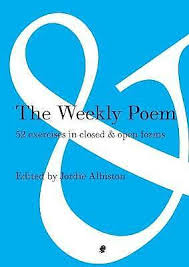 nd friend, Earl Livings and we decided to work our way through the late Jordie Albiston’s book of poetry exercises, The Weekly Poem: 52 exercises in closed and open forms (Puncher & Wattman, 2015). This will a) cure me of the jealousy I feel when I set my students writing exercises and b) keep me accountable. Earl and I declared January the month of haiku – post-Christmas commitments have mounted up for us both but we will start the 52 weeks in February. I’m looking forward to it. It’s consistent writing without being as overwhelming as beginning another novel – which I just don’t have the headspace for.
I’m daunted by the prospect of facing redundancy – I had hoped to be teaching for a few years yet and financially it is going to be challenging. It’s also hard not to feel disappointed that all our work over the years in fashioning such a solid course will disappear into the ether. But change happens.
Hi Catherine
This is very sad news.
As a former student (hopefully you remember me), I found the course was excellent – very in-depth and informative! Nothing compares!
Because of it, I realised my love of poetry (I’ve written about 24 poems now), I’m more aware of writing styles etc. and I’m always aware of ‘paring it back’!
Best of luck to you and Barbara in your future endeavours. Maybe I can catch up with you both if I happen to be down that way in the future. 😊
Kind regards
Cathy Cronin 💌
Thanks Cathy! Delighted to hear of your poetry progress – well done.
I’m very sorry to see this, Catherine. It’s a serious loss for up and coming writers and for teachers who bestow an important legacy.
I met you at CAE (as a student) and La Mama Poetica a long time ago. Writing courses at any level are important for growing new writing communities. May we continue to sow stubborn seeds to grow and nurture the next generation.
Yes, Ann – I sgree with you but the world appears to be ruled by economics…